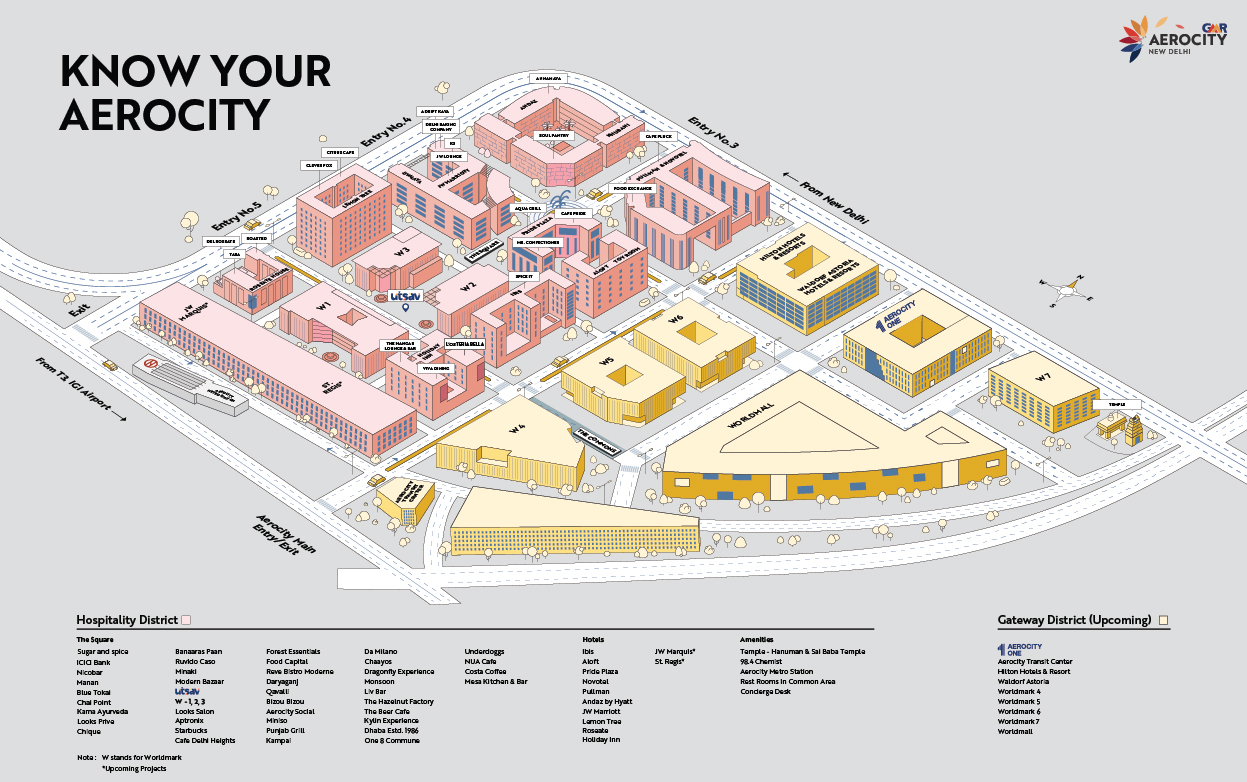
From Rivers to Skies: Rakhigarhi & Aerocity’s Living Urban Continuum



Civilisations are not built in moments; they unfold across millennia, shaped by the quiet persistence of human imagination. India’s story has always been one of continuity. From the fertile valleys of its first cities to the shimmering skyline of its modern metropolises, the same creative current runs strong.
To trace this current from Rakhigarhi, one of the earliest centres of sustainable urban development, to Aerocity, Delhi’s contemporary urban gateway, is to understand how deeply the idea of civilisation endures.
The City by the River
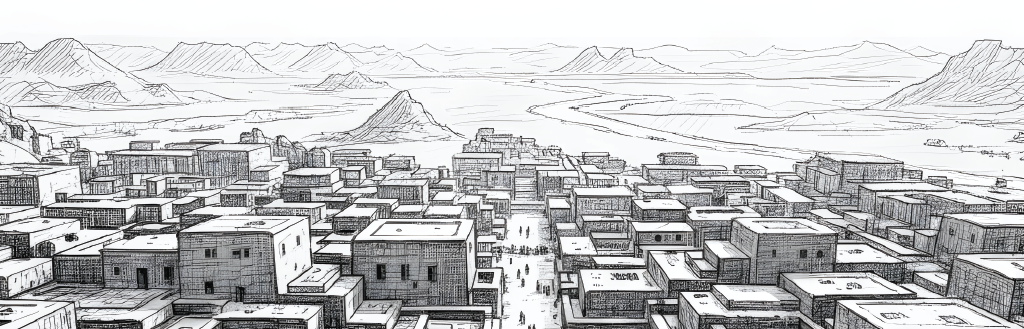
More than 4,000 years ago, along the banks of the ancient Drishadvati River, an urban infrastructure began to take shape. Its name was Rakhigarhi, now a quiet village in Haryana, but once a thriving hub of the Indus Valley Civilisation. Archaeologists describe it as one of the most extensive Harappan sites ever discovered. Beneath its soil lie the foundations of a civilisation that knew how to build, to trade, and to dream.
Excavations have revealed that Rakhigarhi was meticulously planned. Streets met at right angles, drains were covered and connected, and granaries stood in precise alignment with homes and workshops. Every brick and corridor reflected a refined sense of order. This was not accidental. It was a statement of collective intelligence, a people’s understanding that life could be organised, beautiful, and balanced with the rhythms of nature.
The residents of Rakhigarhi lived in harmony with the rivers that sustained them. The Drishadvati and Saraswati nourished their crops, powered their trade, and defined their worldview. To them, water was not just a resource but a sacred connector of life. Their towns were built to respect their flow. Their art, from terracotta figurines to seals, celebrated its presence.
Among these artefacts, the Unicorn Seal stands out as an emblem of ingenuity. Carved in fired clay, it depicts a one-horned creature before a ritual stand, surrounded by signs of a script still unreadable to us. To modern eyes, it is mysterious, yet it speaks clearly of creativity, discipline, and imagination. The seal travelled with traders to distant lands, carrying with it the mark of a civilisation confident in its identity.
That confidence has found a voice again. In the same region where Rakhigarhi once flourished, artisans like Rahul Kalwa, a young kumhaar potter, are reviving this ancient symbol. Using local clay and traditional tools, they recreate the Unicorn Seal not as a relic, but as a living expression of India’s enduring craftsmanship. The seal’s rebirth connects two worlds, the ancient city of rivers and the modern world of flight, through the shared language of creation.
The City Beneath the Skies
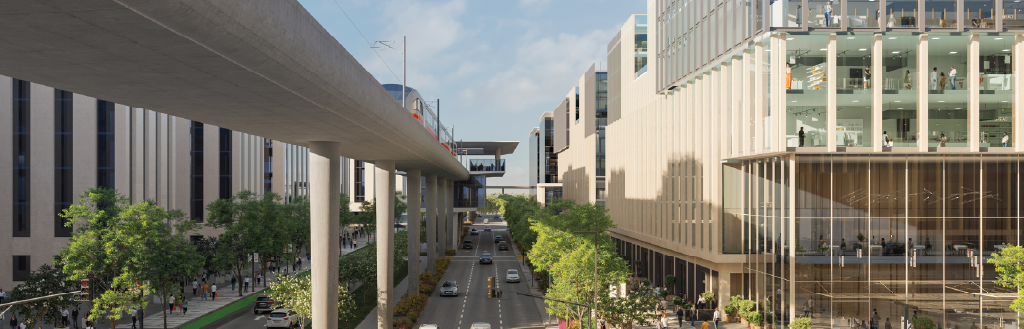
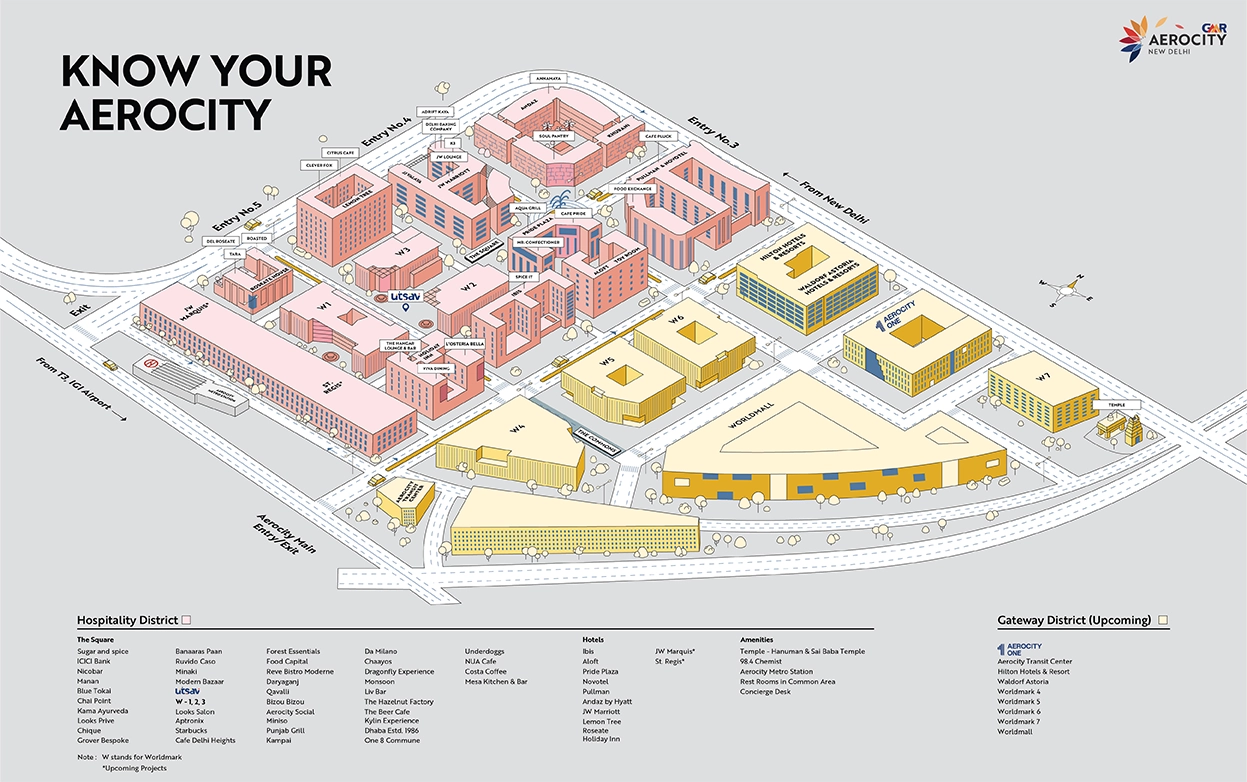
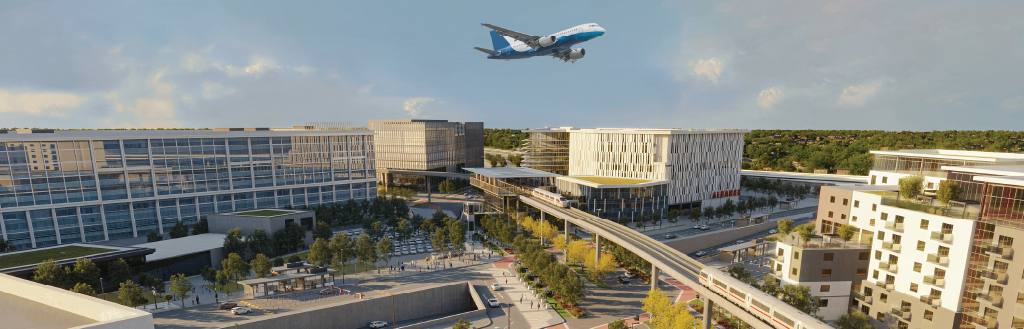
If Rakhigarhi was born of the river, Aerocity rises under the open sky. Situated beside Indira Gandhi International Airport, it stands as a modern interpretation of India’s urban imagination. Where Rakhigarhi was bound by the movement of water, Aerocity thrives on the movement of air. Both, however, are defined by the same impulse: to connect people, ideas, and cultures.
Aerocity’s evolution has been deliberate. What began as a cluster of luxury hotels has grown into a complete urban ecosystem, a district of business, leisure, art, and community. Its streets, public plazas, and cultural spaces create a rhythm of life that feels distinctly modern yet recognizably Indian in its human scale. It is a city that breathes, not just functions.
Sustainability lies at the core of its design. Vast networks for rainwater harvesting and energy efficiency serve as a modern reflection of the ecological intelligence that guided ancient planners’ sustainable urban planning. Just as the Harappans engineered their drainage and water systems to preserve balance, Aerocity integrates technology to do the same for a rapidly changing environment. The logic is timeless: progress must honour the elements that make life possible.
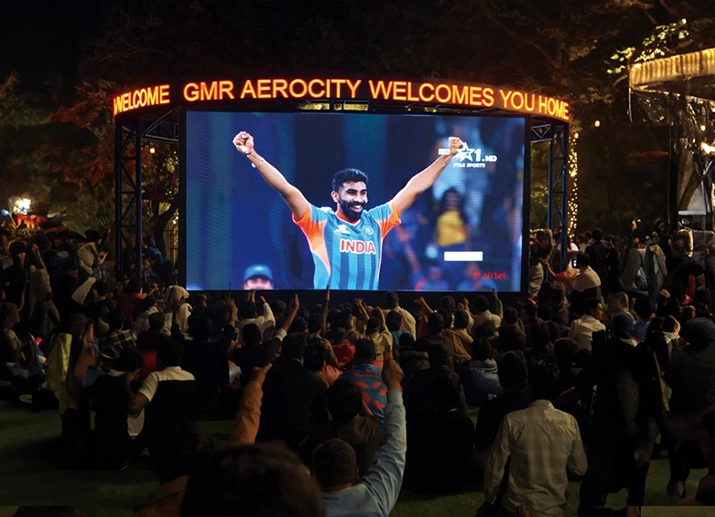
Yet Aerocity is more than infrastructure. It represents a cultural reawakening, a space where India’s global identity meets its deep-rooted traditions. Public art, festivals, and design collaborations foster an atmosphere of creativity that echoes the collective spirit of the Indus cities. The energy that once moved along riverbanks now travels through air routes and ideas, linking the local with the global.
The City Beneath the Skies
The symbolic thread connecting these two cities, Rakhigarhi and Aerocity, is not one of nostalgia but of continuity. The Unicorn Seal, once pressed into clay as a mark of trust and trade, now appears as a handcrafted keepsake for the Hotelier India Awards 2025. It stands not merely as a gift but as a reminder that civilisation thrives on connection.
The seal embodies a truth that both cities express in their own ways: that design is destiny. The artisans of Rakhigarhi understood how to shape the world around them with balance and grace. The architects of Aerocity do the same, interpreting that heritage for a new age. Between the two lies a span of five thousand years, yet the principles remain unchanged: imagination, precision, and respect for nature.
A Civilisation That Never Stopped Creating

The journey from Rakhigarhi to Aerocity is not a leap from past to present. It is a flow, a continuum. The same urge that led ancient builders to align their streets with the stars now drives modern planners to align their cities with sustainability and human experience.
“From Rivers to Skies” is therefore not just a poetic metaphor. It is a living narrative of India’s civilisation, one that continues to evolve without losing its essence. The rivers once carried the lifeblood of trade and culture; the skies now carry the aspirations of a nation in motion.
In both, there is faith in progress, reverence for nature, and a belief that creation itself is sacred. The seal in clay and the skyline in steel are part of the same legacy. Together they remind us that civilisation is not something we inherit; it is something we continue to build, every day, with imagination and care.
From the banks of the Drishadvati to the runways of Aerocity, the story flows on. This urban ecosystem is a testament to the spirit of a people who have always known how to rise, gracefully, from rivers to skies.
Recent Posts


Follow us on: